

A facial injury can alter more than appearance; it changes how a person moves through the world. Understanding your reconstructive options is the first step toward reclaiming both form and function.

When a person is injured in the face, be it from a vehicular accident, a fall, a surgical complication, or a crime, the process of healing is more complex and requires more than just the passage of time. Facial bones, skin, cartilage, and soft tissue must be treated with utmost care. Consulting a facial plastic surgeon in Dallas early in your recovery can make a profound difference, not only in how your face heals but also in how completely it heals.
Reconstructive plastic surgery is a highly medically precise and thoughtfully planned field. The goal of reconstructive plastic surgery after trauma is two-fold: restoring the natural structure and function of the face and giving the patient a sense of self that trauma often quietly takes away. This guide will discuss the causes of facial trauma, the options available to those who are traumatized, the true benefits of plastic surgery, and what the road to recovery is like.
Common Causes of Facial Trauma
Facial injuries occur across all age groups and in many different circumstances. Understanding the origin of the injury often shapes the surgical approach, since different mechanisms produce different patterns of damage and different reconstruction needs.
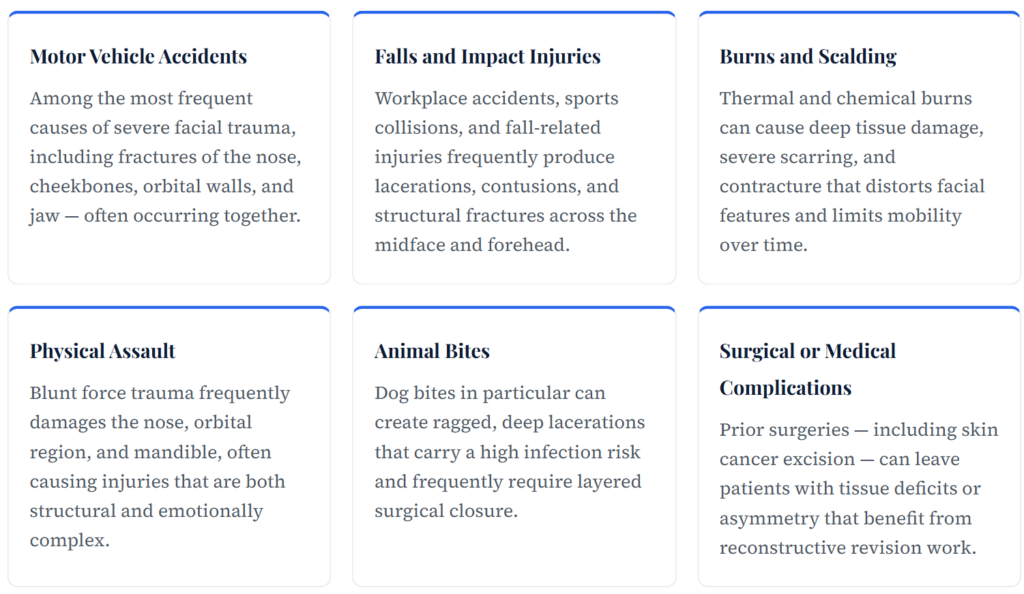
Regardless of the underlying cause, two facts hold consistently true: earlier evaluation by a specialist produces better outcomes, and untreated or inadequately treated facial trauma tends to become more difficult, not less, to address over time.
Clinical Takeaway
Facial fractures that are not surgically addressed within the optimal window can heal in displaced or irregular positions, sometimes requiring more extensive secondary correction later. Early specialist involvement matters significantly in trauma reconstruction.
Reconstructive Plastic Surgery Techniques
The field of facial plastic surgery has advanced significantly over the past two decades. Today’s reconstructive surgeons have access to a wide range of techniques, and the judgment to combine them strategically based on each patient’s specific anatomy and injury pattern.

For patients considering plastic surgery in Dallas, choosing a practice that focuses exclusively on the face, rather than general plastic surgery, means working with a surgeon whose clinical depth in facial anatomy is genuinely specialized. That distinction carries real weight when the surgery involves complex, layered structures like the nose, eyelids, or midface.
Benefits of Post-Trauma Plastic Surgery
The case for reconstructive surgery after facial trauma rests on evidence that spans both the physical and psychological dimensions of recovery. Patients who pursue appropriate surgical intervention consistently report outcomes that go well beyond what they initially expected from the procedure.
- Restored facial symmetry and structure. Surgical correction of displaced fractures, collapsed cartilage, or soft tissue deficits brings the face back into natural proportion, restoring the balance that defines a healthy, recognizable appearance.
- Improved functional outcomes. Many post-trauma patients suffer from nasal obstruction, impaired eyelid closure, restricted jaw movement, or other functional deficits. Reconstruction directly addresses these issues, improving everyday quality of life.
- Significant reduction in visible scarring. Scar revision procedures, including laser treatments and surgical excision, can meaningfully reduce the visibility of trauma-related scars, particularly when approached at the right stage of the healing process.
- Meaningful psychological recovery. Clinical research consistently links visible facial restoration to improvements in self-confidence, social engagement, and emotional well-being. For many patients, surgery is an important chapter in processing the trauma itself.
- Prevention of long-term complications. Untreated structural damage can worsen over time; cartilage collapse, scar contracture, and malunion of fractures all become more challenging to address if left unattended for years.
- A renewed sense of identity. Perhaps the most quietly powerful benefit reported by patients is feeling, once again, that the face in the mirror belongs to them, not to the accident or the injury that changed it.
Reconstructive surgery is not about perfection. It is about returning patients to themselves, giving them back the face they know and the confidence to inhabit it fully.
Selecting an Experienced Plastic Surgeon
The outcome of any reconstructive procedure is inseparable from the surgeon performing it. This is especially true in facial surgery, where the margin for error is narrow, the anatomy is intricate, and the visible results are immediately apparent to both patient and observer.
When evaluating a facial plastic surgeon for post-trauma reconstruction, these are the factors that should guide your decision:
Dual Board Certification
The gold standard is double certification, in both Facial Plastic and Reconstructive Surgery and Otolaryngology–Head & Neck Surgery. This signals comprehensive, specialty-focused training.
Reconstruction-Specific Experience
Ask whether the surgeon regularly performs post-trauma cases, not only elective aesthetic procedures. A portfolio of reconstruction outcomes is the most meaningful evidence.
Technology and Planning Tools
Practices offering computer imaging allow patients to visualize surgical goals before committing. This also reflects a systematic, planful approach to surgical decision-making.
Honest, Detailed Consultation
A trustworthy surgeon sets realistic expectations, explains the full scope of treatment, including the possibility of staged procedures, and takes time to understand your personal goals.
Be cautious of consultations that feel rushed, promise dramatic guaranteed results, or do not address your questions fully. Post-trauma reconstruction is a serious undertaking, and the right surgeon will treat it with the depth and care it deserves.
What Patients Should Expect During Recovery

Understanding what recovery involves, realistically, helps patients prepare mentally and practically, and sets them up for the best possible outcome. Reconstruction after facial trauma is not a single event with an immediate result. It is a process, and that process unfolds in stages.
Days 1–7: Immediate Post-Operative Phase
Expect swelling, bruising, and some discomfort. Most patients manage pain well with prescribed medication. Rest and wound care are the primary focus, and most daily activities are restricted during this window.
Weeks 2–4: Early Healing
Visible bruising typically fades significantly during this period. Swelling continues to resolve, and many patients begin to see early indications of their surgical result — though final outcomes remain weeks or months away.
Months 2–3: Continued Resolution
Deep swelling, particularly in the nose and midface, resolves gradually. Scar maturation is underway, and most patients can return to normal social and professional activity during this phase.
Months 4–12: Final Results Emerge
Structural procedures involving cartilage or bone, such as rhinoplasty or orbital reconstruction, often reach their final, stable appearance between four and twelve months post-surgery. Some patients continue to see refinement beyond this window.
Long-Term Maintenance
Non-surgical treatments such as laser resurfacing, injectables, or skincare protocols can complement surgical results over the years, supporting long-term skin health and maintaining the overall outcome.
Patients who communicate openly with their surgical team, attend follow-up appointments, and follow post-operative care instructions consistently report greater satisfaction with their results and fewer complications during healing.
Moving Forward After Facial Trauma
A facial injury is not the end of a person’s story, but for many patients, moving past it requires more than the natural healing that time provides. Reconstructive plastic surgery, in the hands of a skilled and experienced specialist, is a medically sound and deeply meaningful path forward. It addresses not only what happened to the face but also what happened to the person.
Whether your trauma occurred months ago or years ago, it is never too early and rarely too late — to explore what surgical reconstruction can offer. The most important thing you can do is schedule a thorough consultation with a board-certified facial plastic surgeon who has real experience with post-trauma cases.
Ask your questions. Be honest about your concerns and your goals. And allow yourself the possibility that healing, full, meaningful healing, is still ahead of you
Begin Your Reconstructive Consultation in Dallas
Advanced Facial Plastic Surgery Center is led by double board-certified surgeon Dr. Benjamin Bassichis, who specializes in facial reconstruction for trauma patients. Consultations are personalized, detailed, and always focused on what is realistic and right for you.
 Blitz
Blitz