

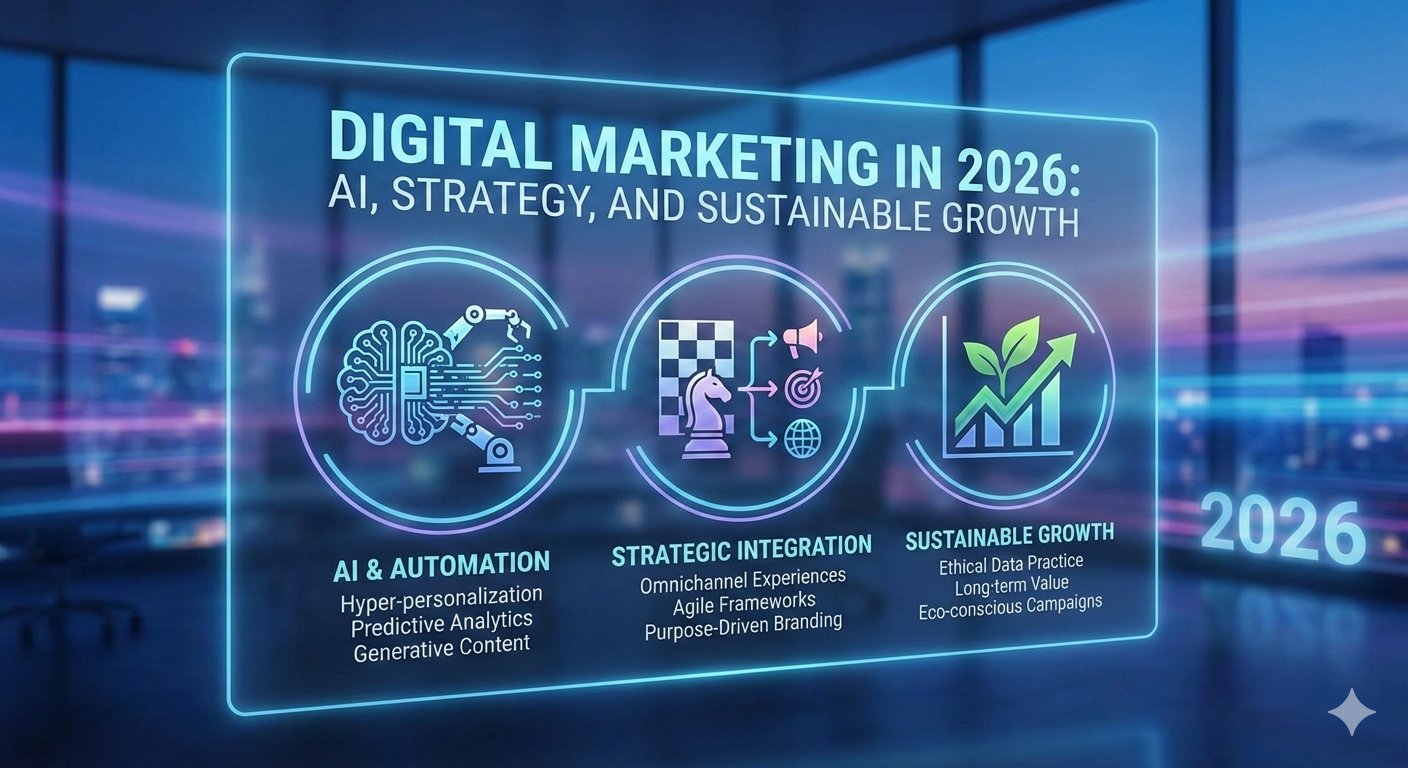
Artificial intelligence is making never-before-seen waves in the marketing world. In 2026, it is the engine powering the strategies that actually win customers, close deals, and drive sustainable revenue growth. Brands that still rely solely on traditional marketing methods are being outpaced by competitors who have embraced AI-driven approaches, and the gap is widening every quarter.
Whether you are a startup founder, a seasoned CMO, or a small business owner, the good news is that AI-powered marketing is no longer reserved for big enterprises with massive budgets. The tools are accessible, the ROI is measurable, and the strategies are clear. Here is a comprehensive look at how AI is transforming marketing, and the practical steps you can take to start increasing your revenue today.
1. AI-Powered Content Creation at Scale
One of the most immediate and visible impacts of Artificial Intelligence in marketing is in content production. According to data from the 2026 State of AI in Marketing Report, 85% of marketers are actively using AI tools for content creation, and 74% of new websites feature AI-supported content. This is not a future trend; it is the new standard.
Platforms like Jasper AI, Writesonic, and ChatGPT are enabling marketing teams to produce high-quality blogs, social media captions, product descriptions, and email campaigns in a fraction of the traditional time. These tools do not just speed up drafting; they also support SEO optimization, multilingual content, and brand tone customization, helping businesses reach more audiences more efficiently.
2. Hyper-Personalization That Converts
Generic marketing is dead. Today’s consumers expect brands to understand their preferences, anticipate their needs, and speak directly to their individual situations. AI makes this kind of hyper-personalization possible at a scale that was previously unthinkable.
Machine learning models analyze behavioral signals, browsing history, past purchases, email engagement, and even time-of-day patterns, to deliver content, offers, and recommendations that feel tailor-made. Research shows that companies using AI for personalization see revenue grow by 3% to 15%, with sales ROI improving by 10% to 20%. Nearly 90% of businesses now invest in personalization, and AI is the tool that makes it scalable.
Practically, this means AI-powered email platforms that send messages at the optimal moment for each subscriber, e-commerce engines that suggest the right product to the right customer, and chatbots that guide users through the purchase journey 24/7 without human intervention.
3. Smarter SEO and Search Marketing
Search engine optimization has always been data-intensive, but AI has fundamentally changed what is possible. Modern AI marketing tools do not just identify keywords; they understand search intent, analyze competitor strategies, and recommend content structures that align with how algorithms evaluate quality and relevance.
Businesses that invest in AI-powered marketing platforms can reduce manual workload, optimize ad targeting, and significantly increase return on investment. Machine learning helps advertisers predict market trends, refine keyword strategies, and improve campaign performance on a continuous basis, adapting in real time rather than waiting for a monthly review cycle.
4. Campaign Automation and Predictive Analytics
One of the clearest revenue advantages AI offers is in campaign automation. AI-driven systems can autonomously manage and optimize marketing campaigns across multiple channels, reducing manual effort and improving efficiency without sacrificing quality. From A/B testing ad creatives to adjusting bidding strategies in real time, AI handles the operational complexity so your team can focus on strategy.
Predictive analytics takes this a step further. By analyzing historical data and identifying patterns, AI models can forecast which leads are most likely to convert, when customers are at risk of churning, and which products are likely to trend, before any of it happens. This allows marketing teams to be proactive rather than reactive, allocating budget where it will have the most impact.
5. AI in E-Commerce: Driving Sales Through Intelligence
For e-commerce businesses in particular, AI has become a revenue multiplier. From intelligent product recommendation engines to dynamic pricing models and AI-powered customer support chatbots, the technology is embedded in every part of the online shopping experience.
A McKinsey report found that 75% of e-commerce companies attribute sales growth to machine learning-powered product recommendation engines. Meanwhile, AI chatbots are handling customer inquiries instantly at any hour, reducing support costs while simultaneously improving the customer experience, a rare combination that impacts both the top and bottom line.
6. Content Marketing Trends: Staying Ahead of the Curve
Content marketing itself is evolving rapidly under the influence of AI. The question has shifted from ‘Can AI write content?’ to ‘How do we build an AI-augmented content strategy that delivers results?’ The most successful marketing teams in 2026 treat AI as a creative partner, using it for ideation, drafting, and optimization while preserving the human voice and strategic thinking that makes content genuinely valuable.
Visual content, video, and interactive formats are growing in importance alongside written content, and AI tools like Canva AI, OpenAI Sora, and Midjourney are democratizing high-quality production for brands without massive creative teams. The result is that smaller businesses can now compete on content quality with much larger rivals.
The Bottom Line: AI Is the Revenue Engine of 2026
The data is clear, the tools are available, and the competitive pressure is real. AI in marketing is not a future investment; it is a present-day necessity for businesses that want to grow revenue, improve efficiency, and build lasting customer relationships.
The brands winning today are not the ones with the biggest budgets. They are the ones who have combined AI’s analytical power with human creativity and strategic vision. The good news: getting started does not require a complete overhaul. Begin with one or two high-impact areas, such as content creation, email personalization, or SEO optimization, measure the results, and scale from there.
 Hamza
Hamza  Blitz
Blitz